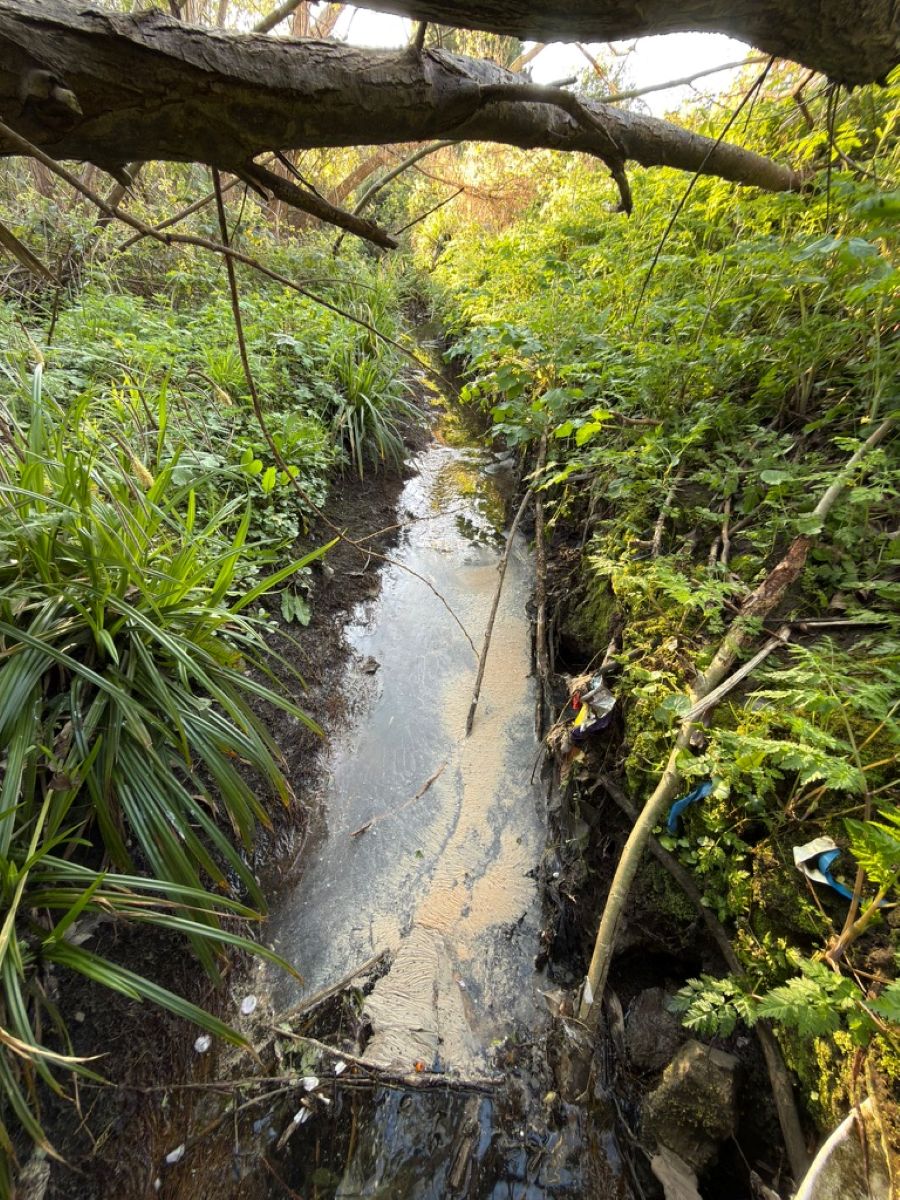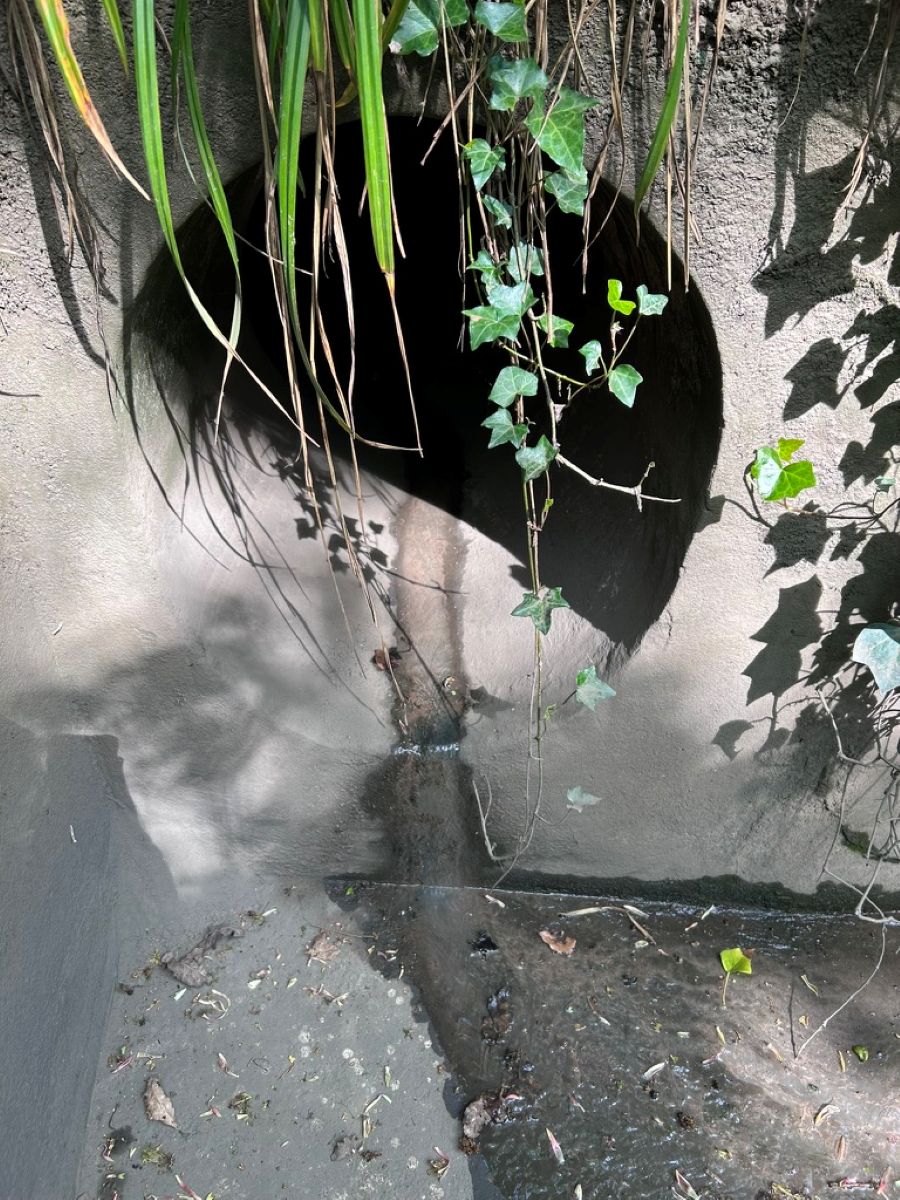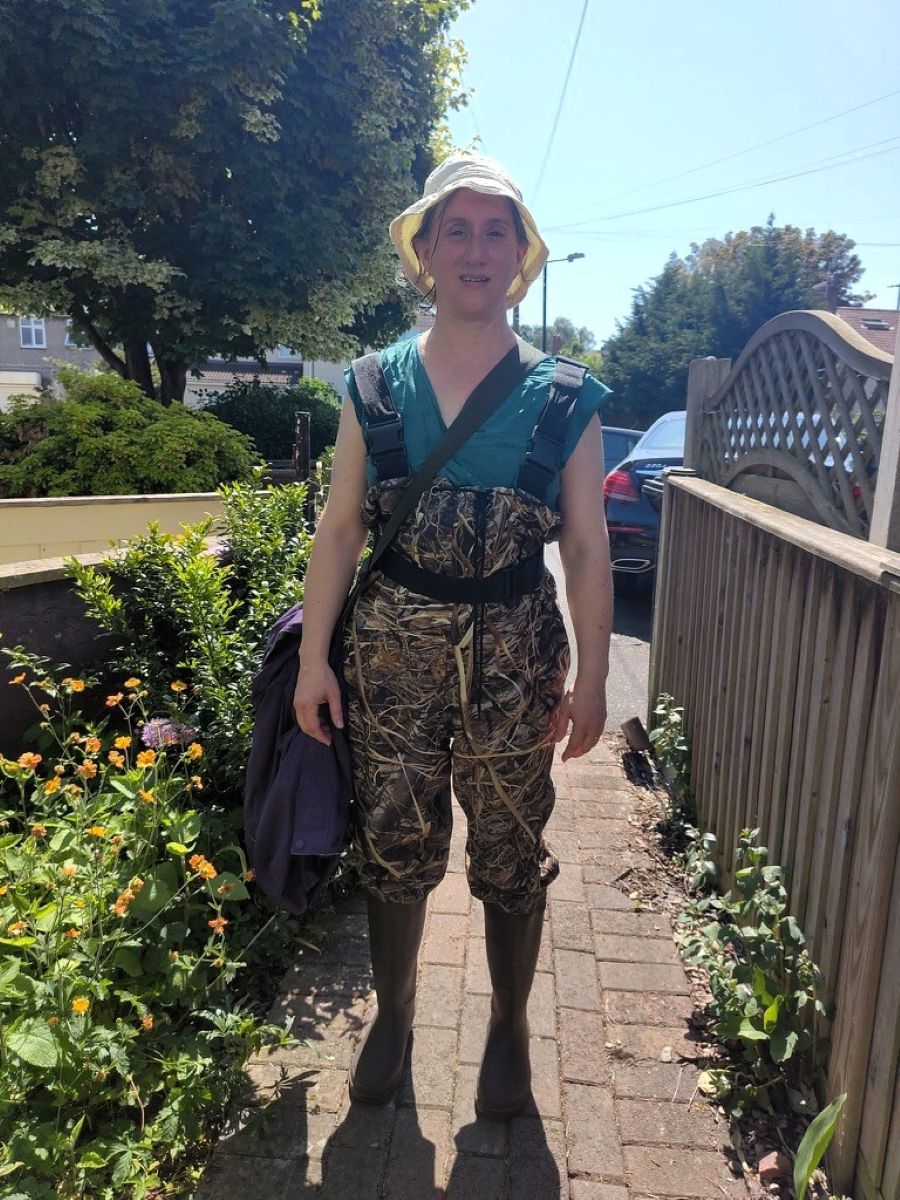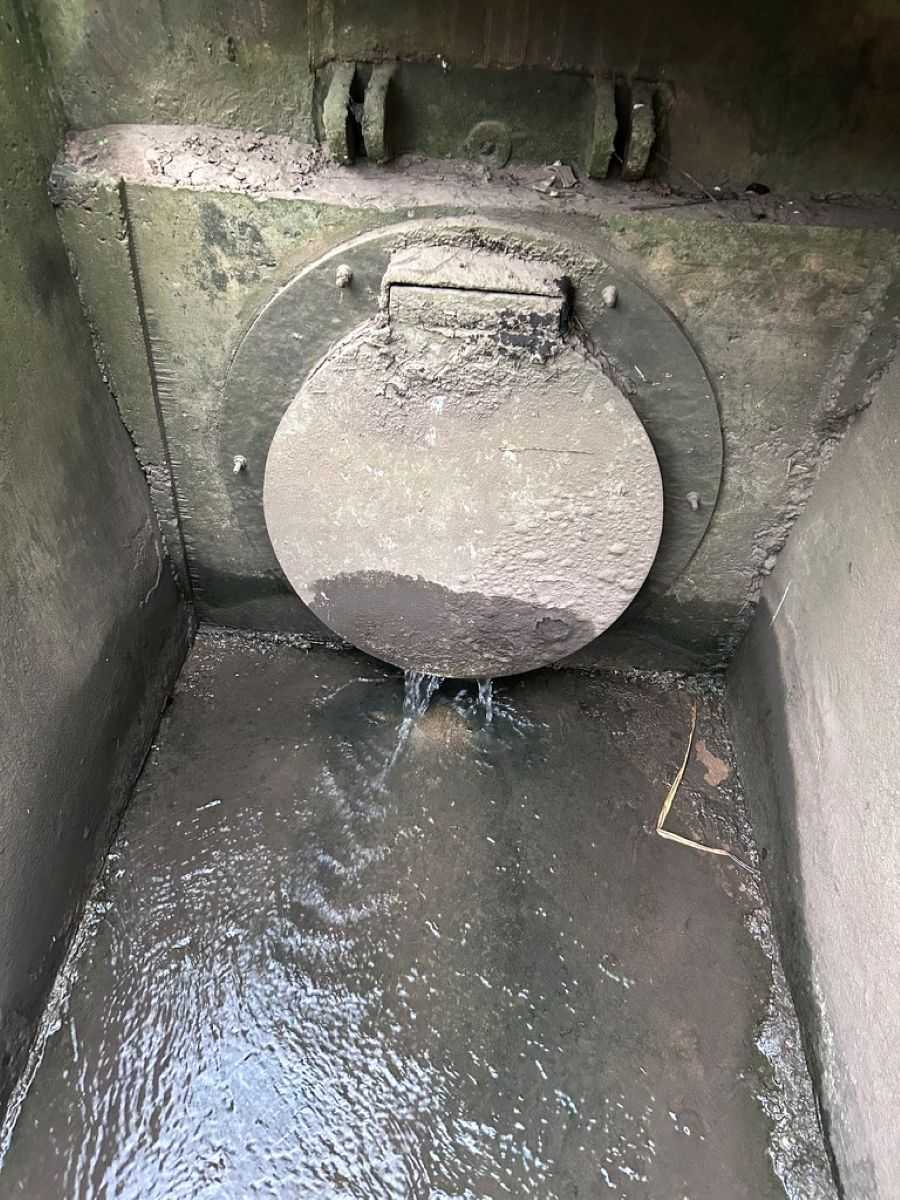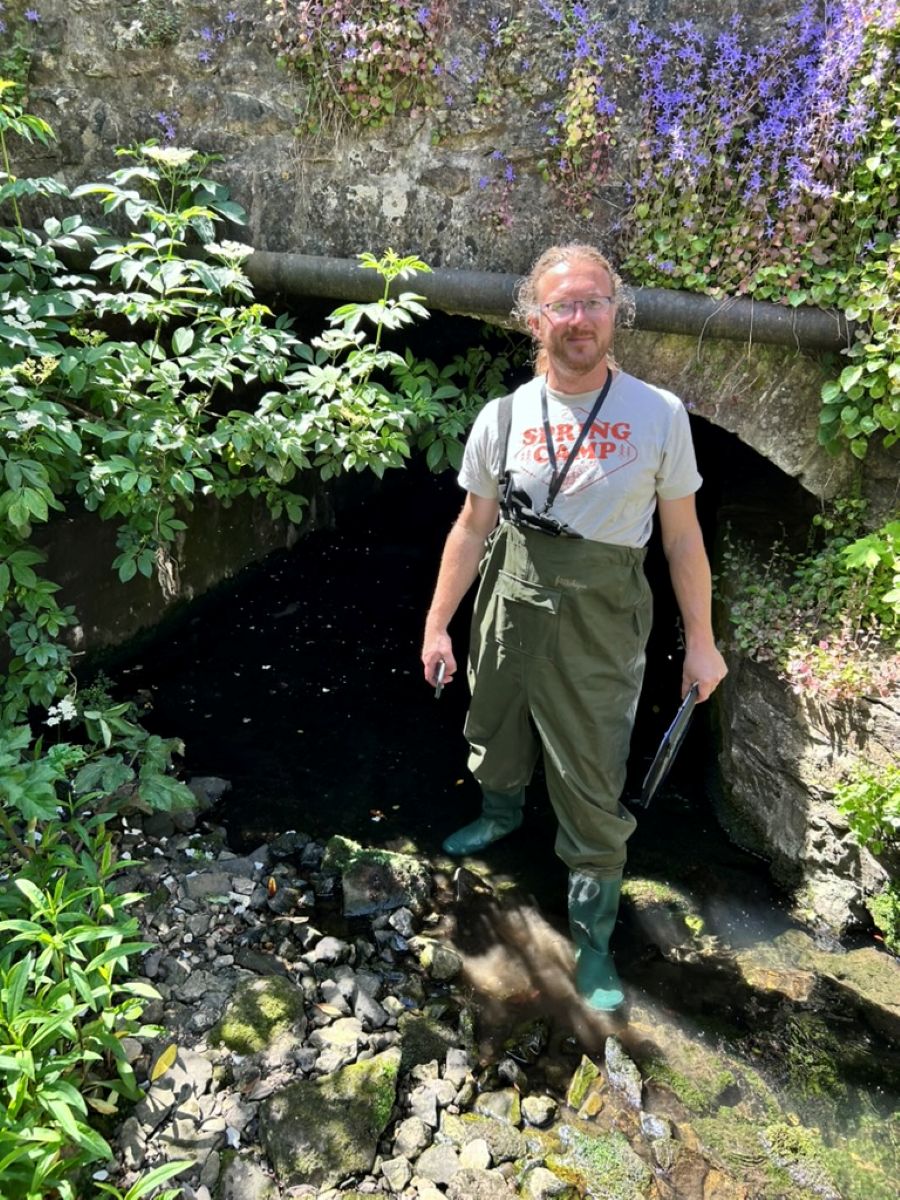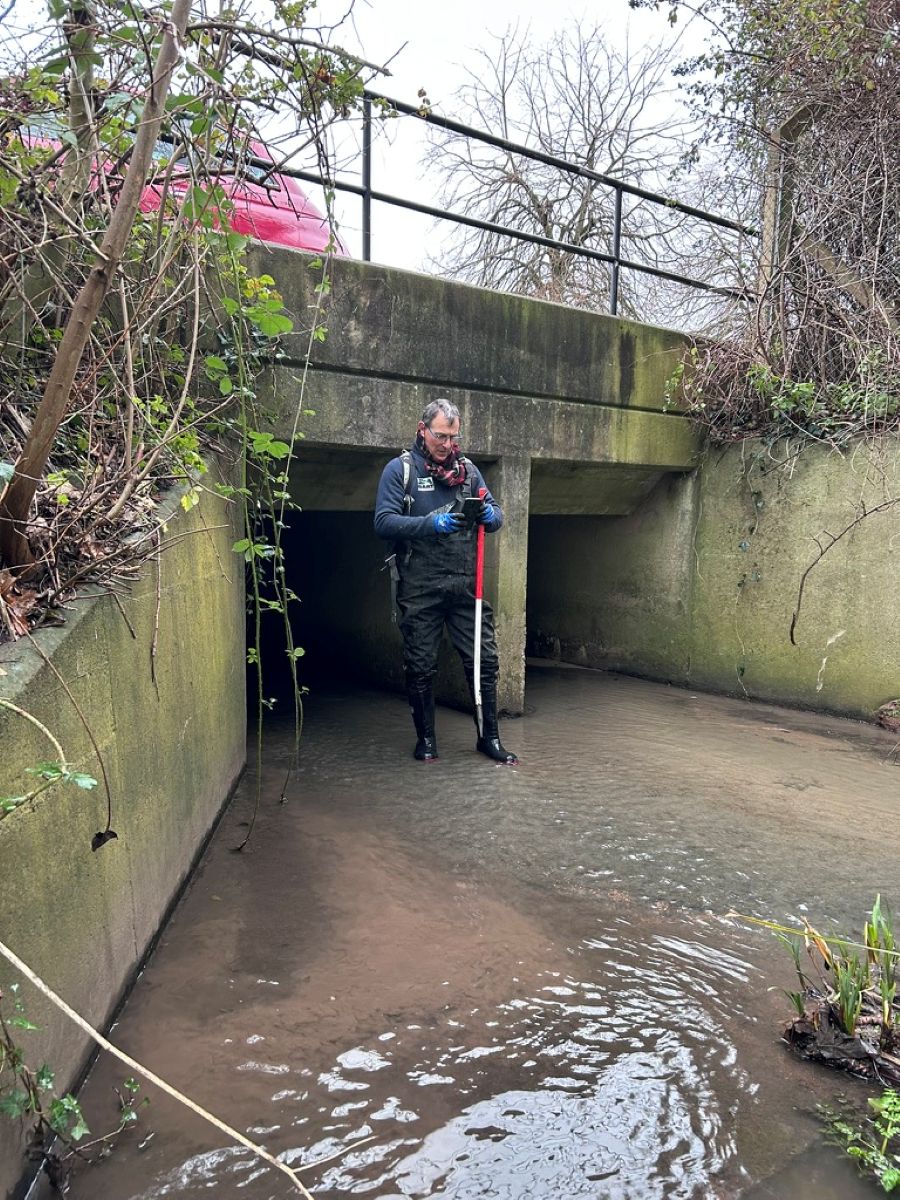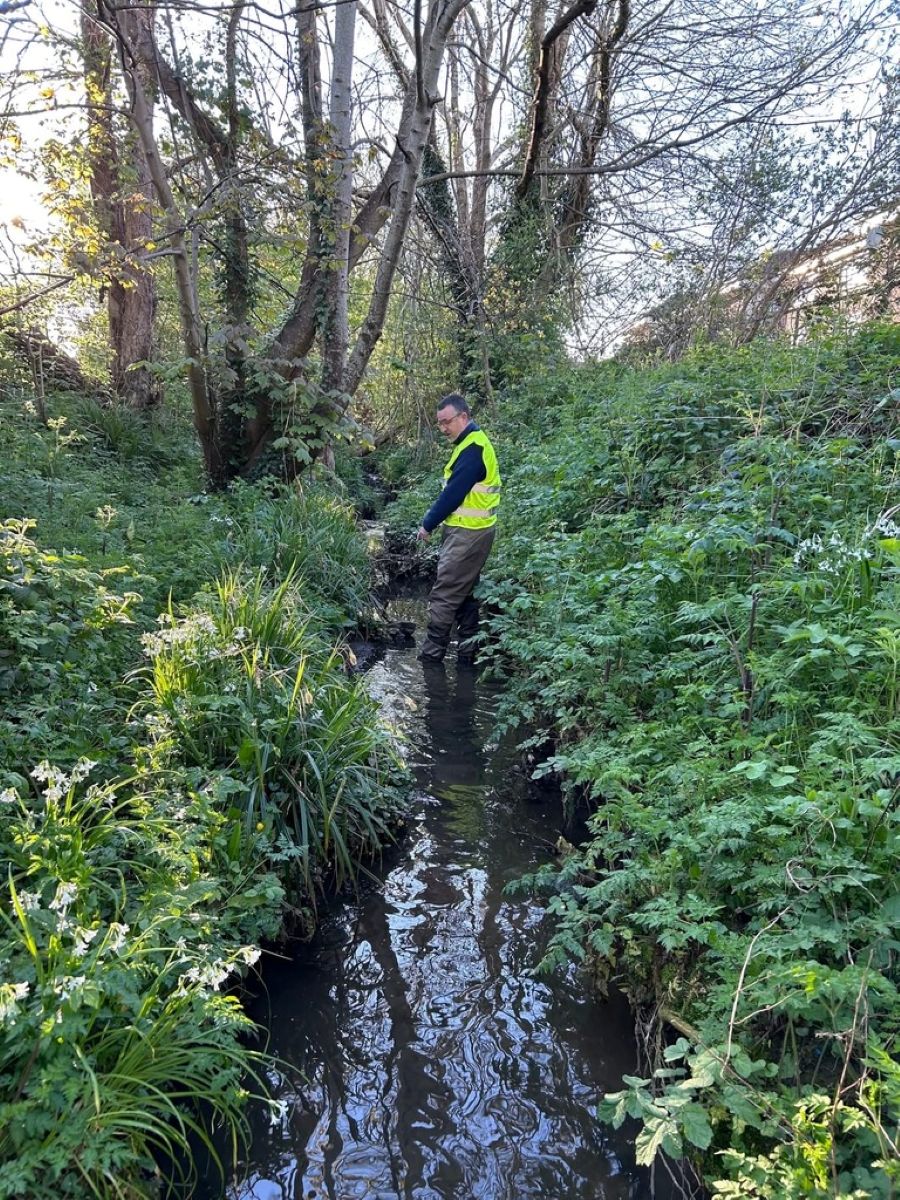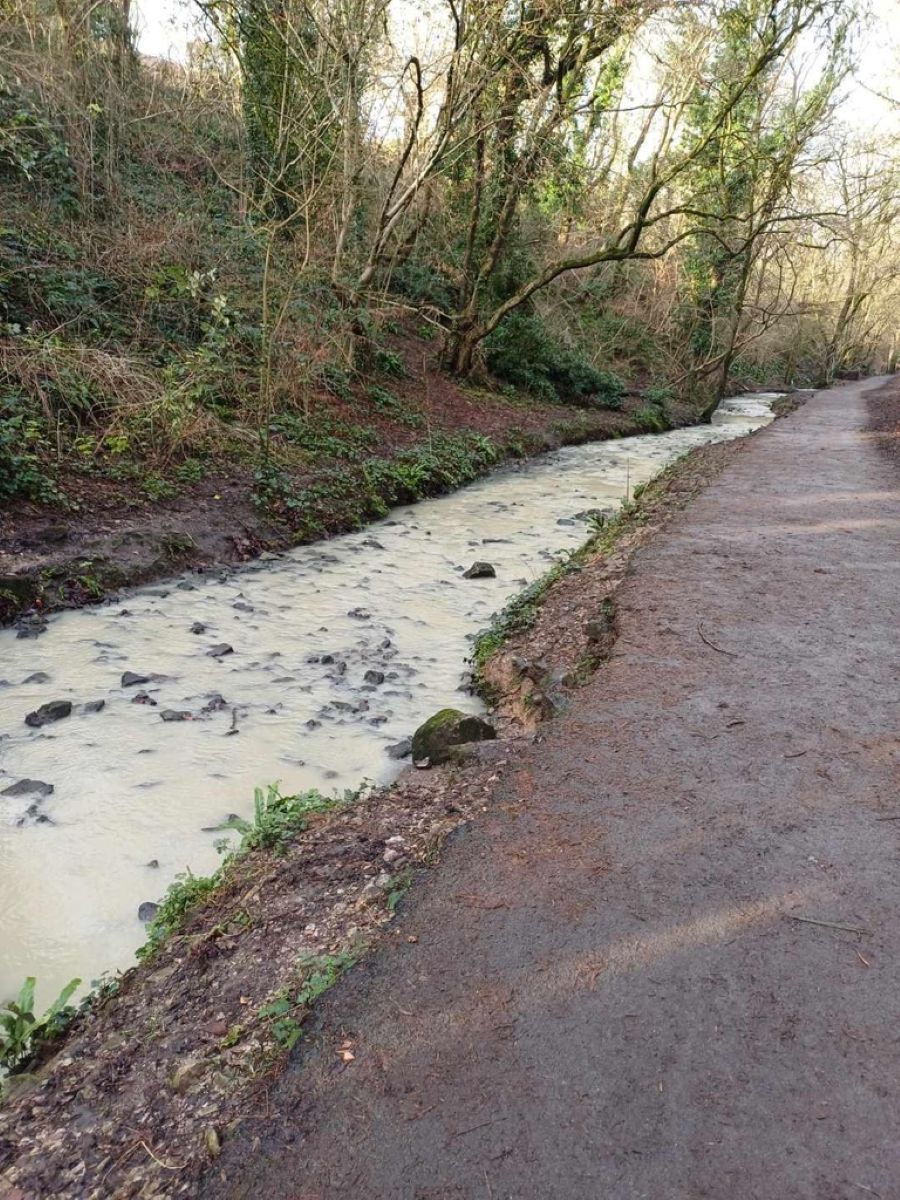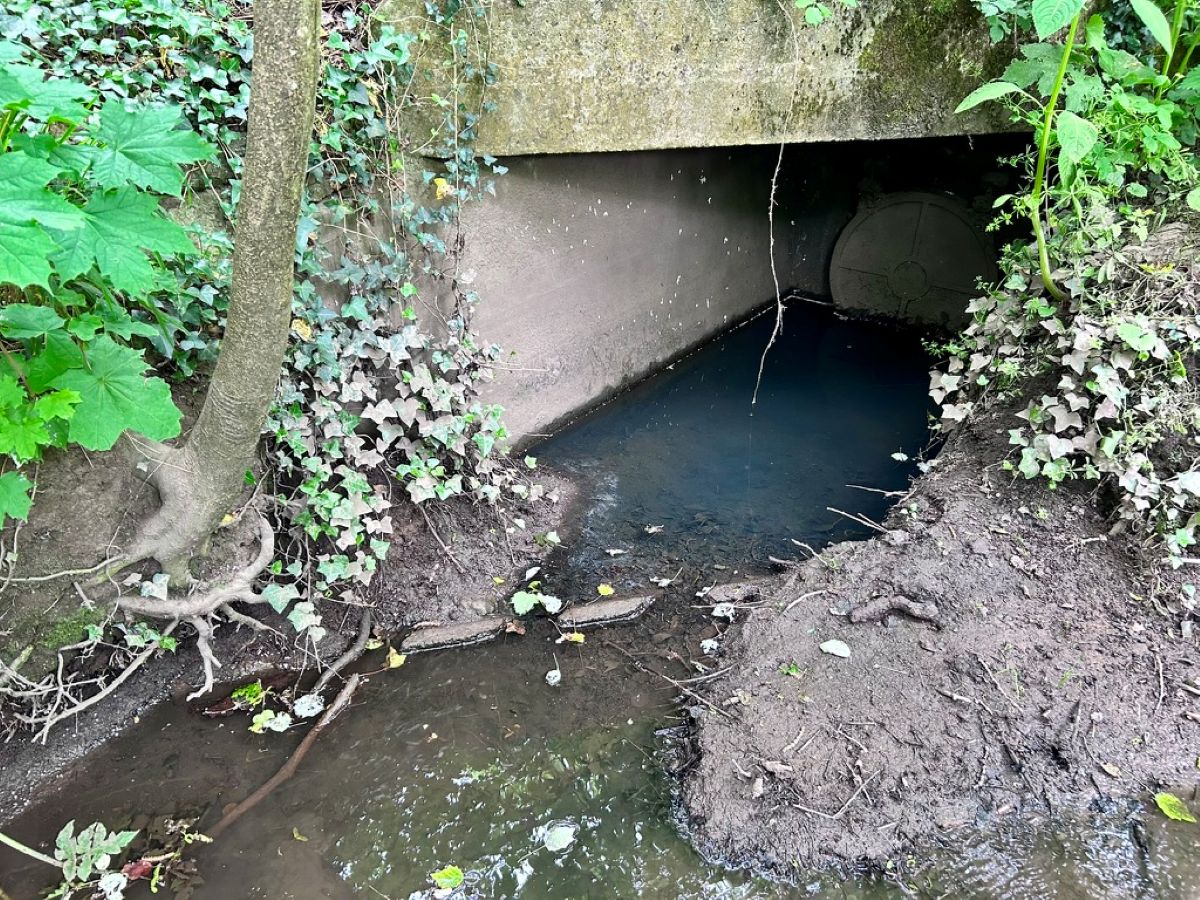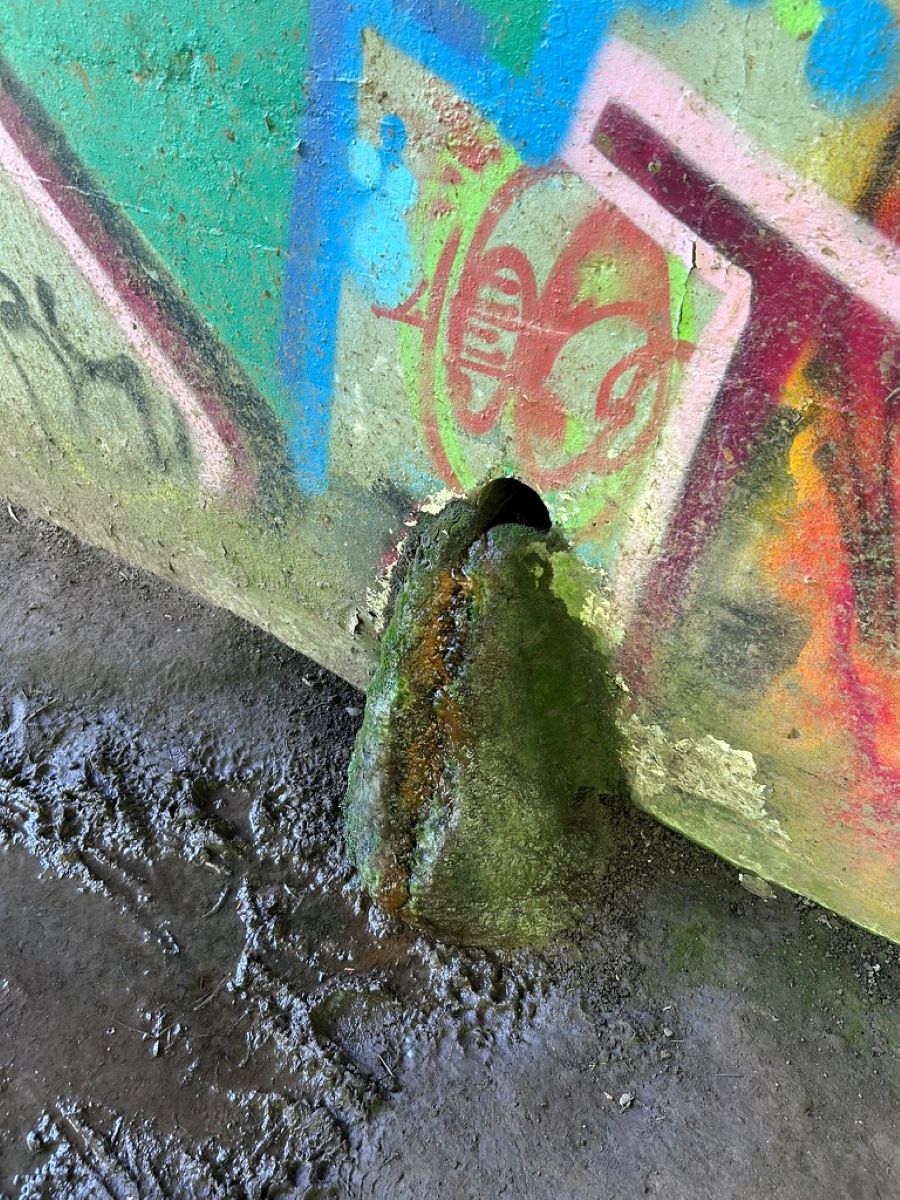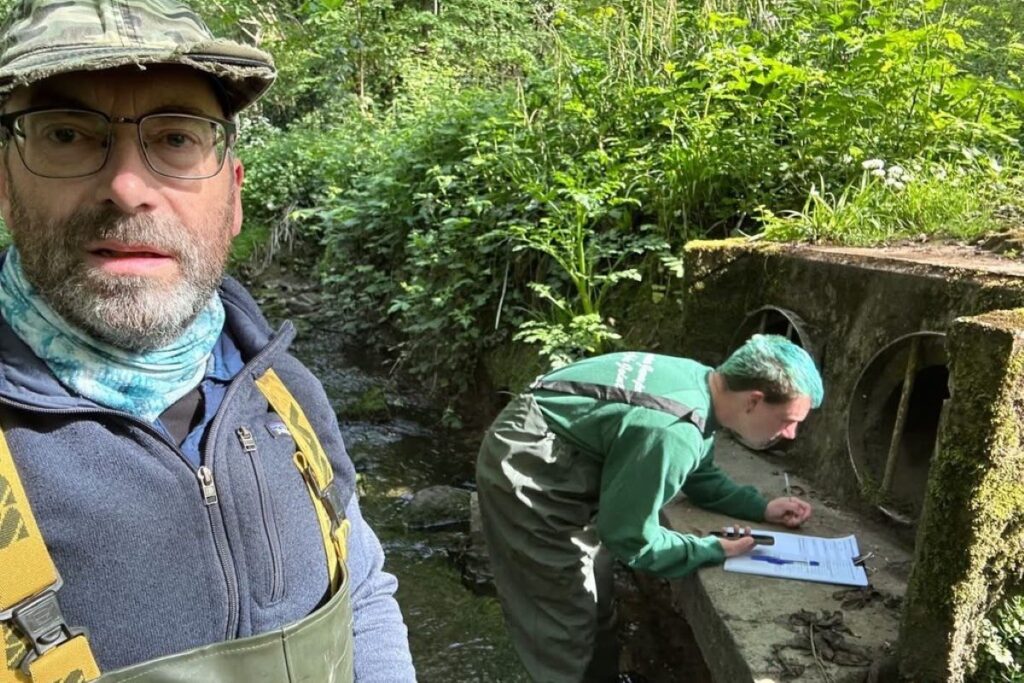
To investigate the cause of pollution in the Trym and Hazel Brook a group of volunteers associated with Trout in the Trym has just completed Bristol’s first Outfall Safari. This was modelled on an approach developed by the Zoological Society for London.
Ten individuals donned waders to walk in pairs on predetermined stretches of the river, at least 4 days after any rainfall. They started at Sea Mills, working upstream to Shetland Road in Southmead (Trym) and up near Catbrain Hill (Hazel Brook). 63 separate outfalls were recorded, including descriptions, key data, photographs and precise locations.
Eight of these outfalls were reported. Four to Wessex Water for follow-up action (as potentially from misconnected drains); two to Bristol Water (as potential water supply leaks); one was reported to the council (it’s damaging a footpath) and one to the Environment agency. Several will now be closely watched in the months ahead.
Organiser of the safari, Peter Coleman-Smith said:
”I was pretty surprised – and pleased – at how few problematic outfalls we found and how little sewage debris. So, not many misconnected drains. This, plus the appearance of many recent pollution events and their transient nature, points to abuse of roadside drains as the key source of visible pollution in the Trym.”
Abuse of drains is where paint, oil, plaster-washings, chemicals, etc are poured into the surface water drain network. Contaminated water then flows directly into rivers and streams with no treatment.
Awareness is low that disposing of substances like this via internal sinks or external storm drains is actually a punishable offense. Liquid paint, oil, etc, are classified as hazardous chemical wastes as they contains toxins, heavy metals or volatile organic compounds (VOCs). Drain abuse can also lead to blockages or damage to drains. Instead Household Waste Recycling Centres should be used and they can give advice about how to dispose of different materials correctly, within the law and minimising environmental damage.
Participants of the safari really enjoyed it, welcoming the chance to do something for the river. Feedback included:
- I thoroughly enjoyed my safari and feel so rewarded just helping to look after the Trym
- It’s great that we now have all that information to hand to direct future attention/reporting
(click / tap images to enlarge)