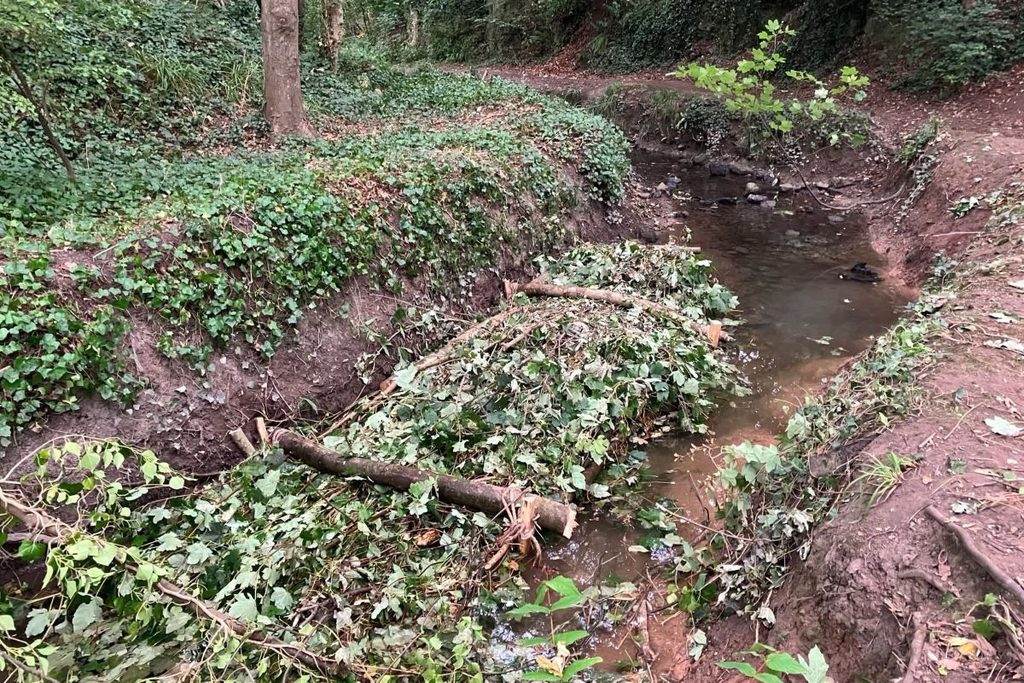
“What’s a berm?” you’re probably asking. Answer – it’s a flat shelf, raised barrier, or mound of compacted soil, wood or rock used to separate spaces, control water, or reinforce structures.
Earlier surveys by Bristol Avon Rivers Trust (BART) identified that much of the Trym has been historically modified and straightened. This results in relatively low habitat complexity and provides limited cover for fish. Their surveys highlighted opportunities to improve habitat for fish and aquatic invertebrates and to improve flow diversity.
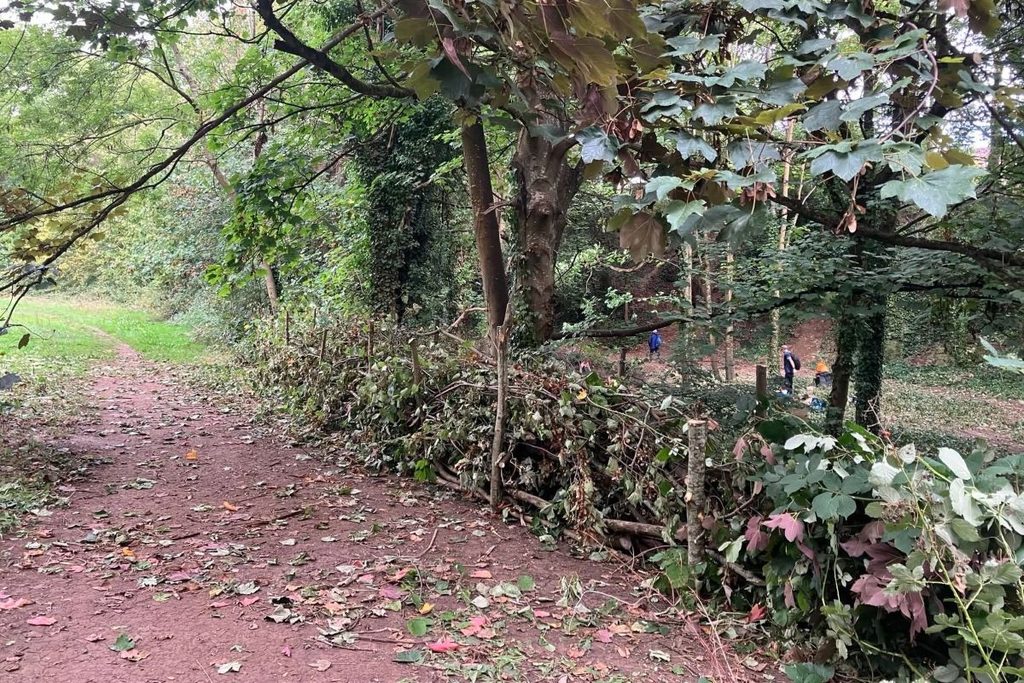
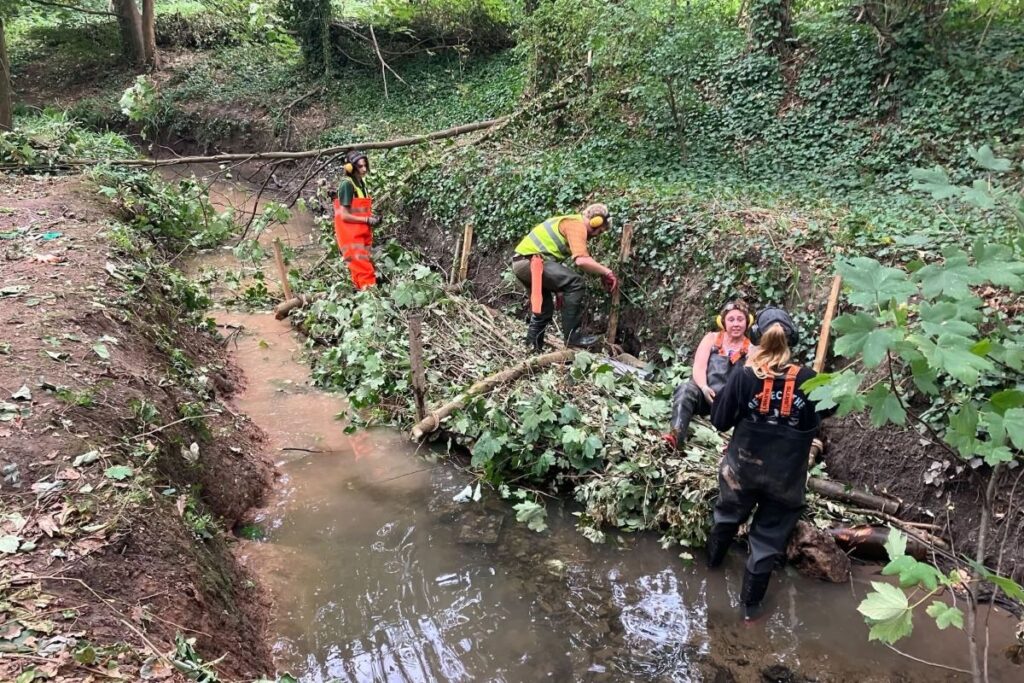
A section of the River Trym, downstream of Coombe Dingle car park, was chosen as a starting point for the river restoration works in September. Trout in the Trym volunteers helped BART create some berms and also made dead hedges to provide cover for wildlife.
While the project is ongoing, parts of the river and its banks may look quite messy, but the end results will be worth it. This is the first real delivery of habitat restoration on our river by Bristol Avon Rivers Trust and hopefully not the last. Future work could include making some weirs more passable, and educating and encouraging people to reduce the abuse of roadside drains.
The project is being funded by the West of England Mayoral Combined Authority’s Green Recovery Fund, with support from Bristol City Council.